How odor builds in a high-turnover cabin
Most passengers do not leave a mess, but almost all of them leave something: smoke carried on a jacket, takeout in a bag on their lap, sweat after a game or a hike, snow melting off boots, a drink set on the floor. None of it seems like much on a single ride. Over hundreds of rides, the rear seat cushion, the carpet in the rear footwells, and the seat belts absorb a blended smell that drivers often stop noticing because they sit in it all day.
Passengers notice right away. A stale cabin is one of the easier things for a rider to complain about, and when the vehicle is eventually sold or traded, the appraiser notices too. Rideshare cars also rack up miles fast, so they often reach trade-in age with a lot of interior wear and a smell to match.
End-of-shift routine
Ten minutes at the end of each shift prevents most of the buildup.
- Remove every bit of trash, including receipts and wrappers tucked into door pockets and seat-back pouches.
- Check the rear footwells and under the front seats with a flashlight for spilled drinks or food.
- Blot any wet spot immediately with clean towels; do not leave a spill to dry overnight.
- Shake out rubber floor mats and let them dry outside the vehicle if they are wet from snow.
- Leave windows cracked slightly when parked in a secure spot on dry, warm days.
- Note anything that needs deeper cleaning, such as a stain on the seat cushion, so it is handled within a day or two.
Masking versus removing
| Covering it up | Taking it out |
|---|---|
| Hanging fresheners and vent clips | Prompt blotting and cleaning of spills |
| Fragrance sprays between rides | Periodic extraction of rear seats and carpet |
| Strong scents can bother riders with sensitivities | Regular cabin filter changes |
| Underlying smell returns when the scent fades | Neutral cabin that does not need a cover scent |
Planning the deeper cleanings
- Rear seat and carpet extraction
- On a regular schedule based on ride volume, and after any significant spill
- Cabin air filter
- More often than the owner's manual suggests for typical driving
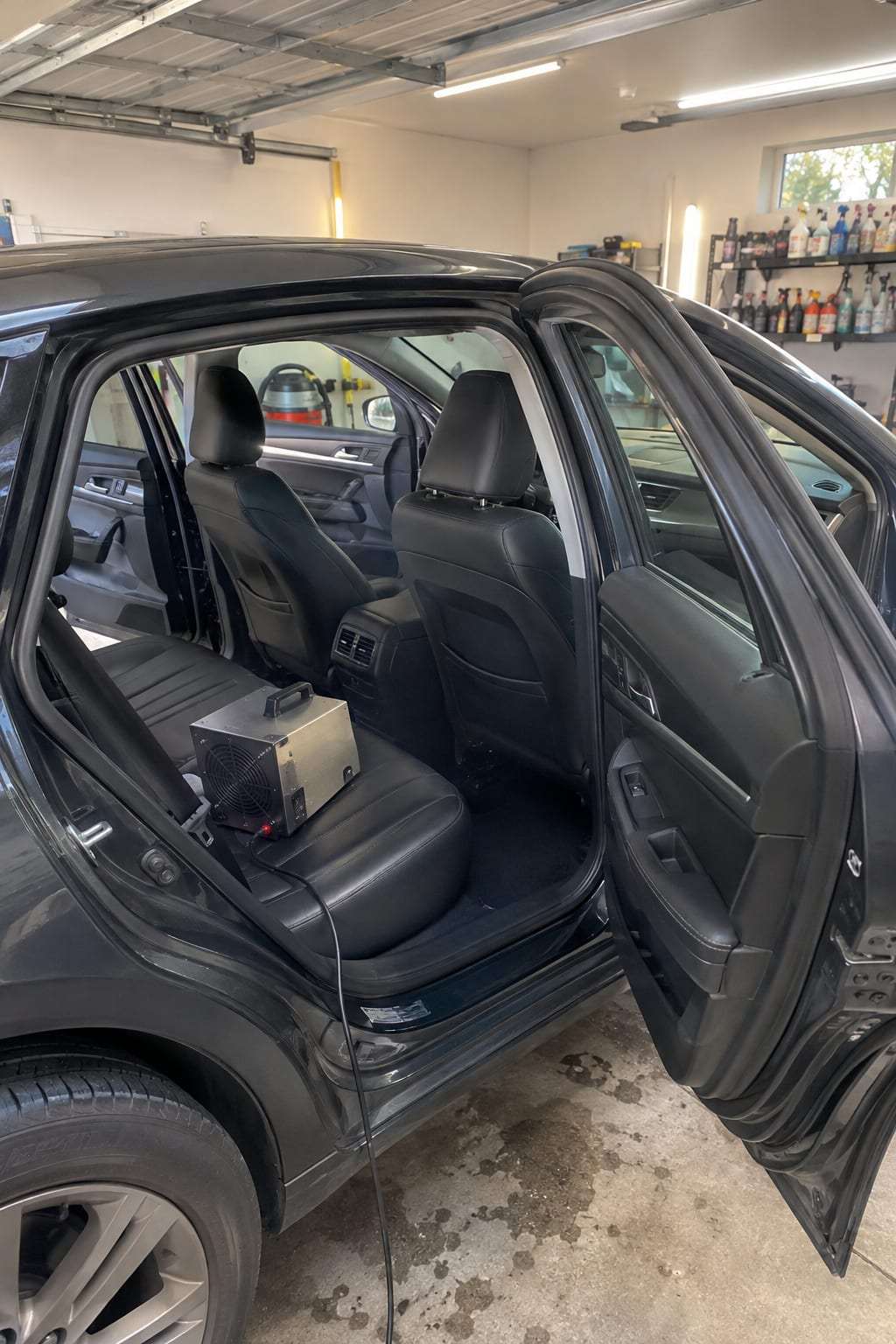
- Whole-cabin odor treatment
- When a smell persists after cleaning, or before sale or trade-in
- Seat covers
- Washable covers on rear seats are easier to keep fresh than the original fabric
Common questions
Is it a problem to use a strong air freshener in a rideshare car?
Many riders find heavy fragrance unpleasant, and some react to it. A neutral cabin is a safer goal than a scented one.
What should a driver do after a rider is sick in the car?
Stop accepting rides, wear gloves, remove solids, blot liquids, and clean with a product suitable for the material. Bodily fluids can soak into seat foam quickly, so a professional extraction is often worth it.
General information for Arvada, not a quote or professional advice. In an emergency, call 911.